
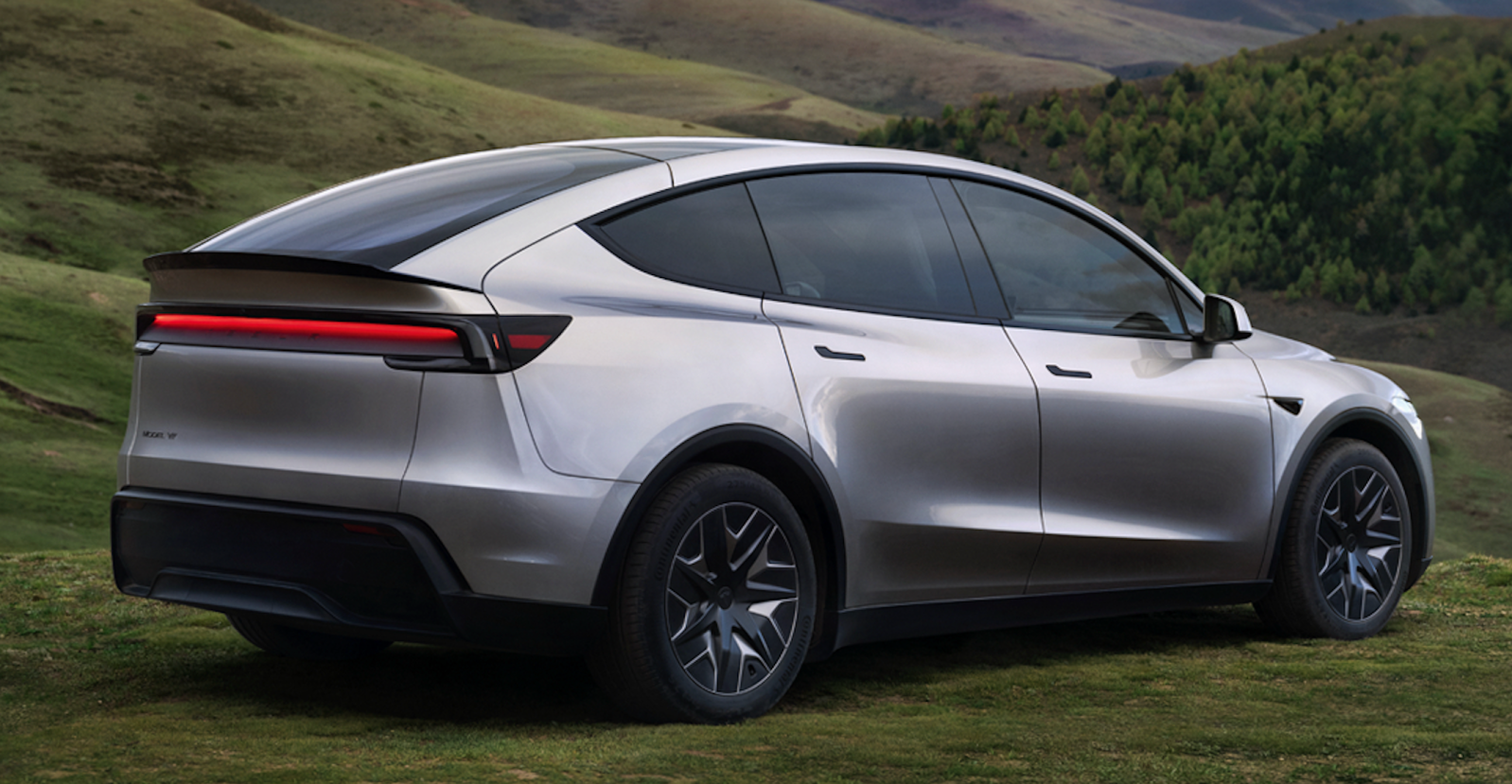
Tesla’s US sales fell an estimated 17% year-over-year in January 2026, according to registration data from Motor Intelligence.
The automaker moved an estimated 40,100 vehicles during the month, down from 48,500 in January 2025. Tesla doesn’t report monthly US sales figures, so third-party registration estimates are the best available proxy — and they point to a fourth consecutive month of declining domestic demand.
A domestic market in retreat
The January estimates continue a trend that has now defined the better part of two years for Tesla’s US business. Based on Motor Intelligence data, domestic registrations have declined year-over-year in nine of the past twelve months, with only the July-September 2025 window posting gains, a burst driven almost entirely by consumers rushing to buy before the $7,500 federal EV tax credit expired on September 30. Once that artificial demand pull-forward ended, the bottom fell out.
Motor Intelligence estimates that full-year 2025 US registrations totaled 568,454 units, down 10% from 2024’s 625,712. That tracks closely with Tesla’s global story: the company delivered 1.636 million vehicles worldwide in 2025, an 8.6% decline and the second consecutive year of falling deliveries.
The January drop also follows an ugly close to 2025. In November, Tesla’s US sales fell to under 40,000 units, the lowest monthly total since January 2022. December brought a modest sequential recovery to 48,300 units, but that number was still below year-ago levels.
Tax credit hangover meets brand erosion
Two forces are converging against Tesla’s US demand. The first is structural: the expiration of the $7,500 federal EV tax credit effectively raised the cost of every Tesla by that amount overnight. According to Cox Automotive, the average EV transaction price rose 18.1% year-over-year to $51,981 in January 2026.
The impact on the broader EV market has been severe. EV market share in the US collapsed to just 6.6% of retail sales, down from 9.5% a year earlier. Kelley Blue Book estimates that total US EV sales in January 2026 fell nearly 30% year-over-year. Tesla is far from the only automaker hurting, but its estimated 17% decline is notable because the company had already been losing ground before the credit disappeared.
The second force is Tesla-specific. The brand damage from Elon Musk’s political activities, and now his links to Epstein, which is a story that doesn’t appear to go away, continues to compound.
Tesla’s brand value crashed 36% in 2025, falling to $27.6 billion — less than half its $66.2 billion peak in 2023, according to Brand Finance.
In California, Tesla’s most important US market, Experian data shows market share fell from 11.6% of all vehicle registrations in 2024 to 9.9% in 2025. Tesla’s California sales have been dropping by double digits while the rest of the state’s EV market grew. That is a devastating signal for a brand that built its identity in the Bay Area.
Tesla launched the lower-priced Model Y Standard ($39,990) and Model 3 Standard ($36,990) in Q4 2025 to address affordability concerns. But as Electrek reported earlier this week, price cuts alone aren’t pulling buyers back in. The problem is no longer just price, it is the brand itself.
Competitors closing the gap
Tesla still holds 46% of the US EV market, down from 49% in 2024 and 75% in early 2022. The automaker that gained the most ground is GM, whose EV sales surged 48% in 2025 to nearly 170,000 units, lifting its US EV share from 8.8% to 13.2%. The Chevrolet Equinox EV alone sold nearly 58,000 units, making it the third best-selling EV in America behind only the Model Y and Model 3.
While GM is gaining, the overall US EV market contracted for the first time in years. Total 2025 EV sales landed at roughly 1.28 million units, down about 2% from 2024, according to Cox Automotive. Ford’s EV business slipped further, with sales dropping 14% to about 84,000 units. Hyundai-Kia also retreated, falling from 124,000 to fewer than 104,000 EV sales.
A global problem, not just a US one
The picture is far worse internationally. BYD overtook Tesla as the world’s largest EV seller in 2025, moving 2.26 million battery-electric vehicles compared to Tesla’s 1.64 million. That gap is widening, not closing.
In Europe, where Tesla’s sales collapsed 27.8% for the full year, 2026 has started even worse. Registrations across five major markets are down 44% year-over-year in January, with the UK plunging 57% and Norway cratering 88%. In the UK alone, BYD nearly doubled Tesla’s volume last month, selling 1,326 battery-electric vehicles versus Tesla’s 647.
Tesla’s response to this multi-market collapse has been to pivot away from traditional auto sales entirely. On its Q4 2025 earnings call, the company announced the discontinuation of the Model S and Model X, and Tesla executives told investors to focus on “transportation as a service” through robotaxis and Optimus robots rather than vehicle deliveries. The company plans to more than double capital expenditures to $20 billion in 2026, directed almost entirely at AI and autonomous driving infrastructure, not new car models.
Electrek’s Take
I wouldn’t be shocked if Tesla even stops reporting car deliveries at some point this year.
Top comment by Whiskers
Unfortunately I have a 2023 Model S. Pretty sure Tesla will be out of the car business, either voluntarily or involuntarily, in a few years. Anyone who buys a Tesla now will be buying a soon to be orphaned vehicle. Nobody will want an orphaned vehicle. Resale value will be virtually zero.
The US was supposed to be Tesla’s stronghold, the market where brand loyalty runs deepest and competition is thinnest. A 17% January decline, on its own, is not alarming given the post-tax credit environment, but it’s a problem when it is your last major stronghold.
Every EV maker took a hit. The problem is that Tesla has now been in decline domestically for nine of the past twelve months, and the three months of growth were entirely a tax credit pull-forward. Strip that out, and the trajectory has been relentlessly downward.
We keep hearing about how robotaxis and Optimus will transform Tesla’s business. Maybe they will, eventually. But right now, the core business, the one that generates actual revenue that finances Tesla’s shift is shrinking in every major market simultaneously.
Tesla’s response has been to kill the Model S and Model X, slash prices on the Model 3 and Y, and tell investors to focus on “transportation as a service.” That is a company committing automotive suicide while asking shareholders to trust that the replacement revenue streams will arrive on time. Given Musk’s track record on timelines, that is a significant ask.


FTC: We use income earning auto affiliate links. More.



Comments